The first industrial revolution was about steam. The second was about electricity. The third was about silicon. The fourth will be about the Atom.
For decades, we have been trapped in a digital cage. Even our most powerful supercomputers are essentially just very fast abacuses, processing 1s and 0s in a linear, binary fashion. But nature doesn’t work in bits; it works in probabilities, waves, and entanglement. We are finally moving from “calculating” the world to simulating nature itself. By 2050, the “Quantum Age” won’t just be a laboratory curiosity, it will be the operating system of civilization.
Read about How Quantum Computing Works here.
Healing the Incurable: The End of Trial and Error
Current classical computers are surprisingly inept at chemistry. To perfectly simulate a single caffeine molecule, a binary computer would need to be the size of a small city. Because we can’t simulate biology accurately, drug discovery today is largely an expensive game of “trial and error.”
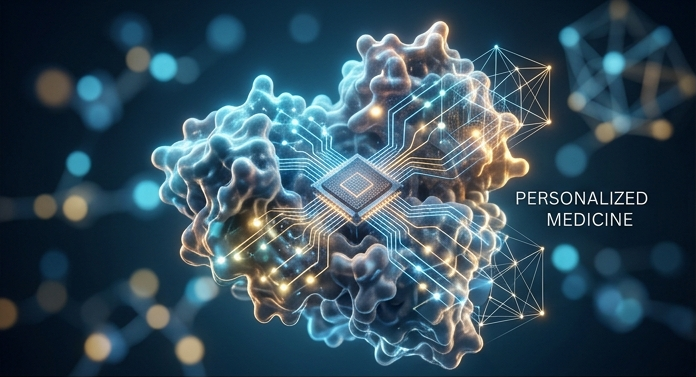
Quantum computers change the game by mastering protein folding. Instead of testing millions of chemical combinations in a physical lab over ten years, we will simulate the exact molecular interaction in a virtual environment within hours.
- Personalized Medicine: We will design drugs tailored to your specific DNA.
- The End of Disease: Conditions like Alzheimer’s and Stage IV cancers, once seen as “glitches” in our biology, will have specific, quantum-calculated “patches.”
Saving the Planet: Alchemy for the 21st Century
The most pressing challenge of our era, Climate Change, is ultimately a materials science problem. We are currently using 2% of the world’s entire energy supply just to create fertilizer via the century-old Haber-Bosch process.
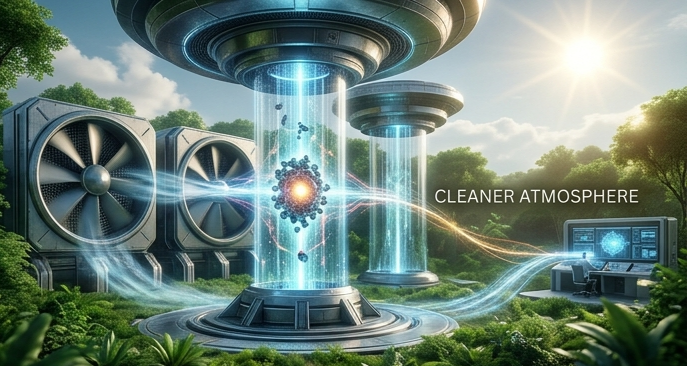
Quantum simulations will allow us to unlock the secrets of nitrogenase, an enzyme bacteria use to make fertilizer at room temperature. But it doesn’t stop there:
- Carbon Capture: We will discover new catalysts capable of stripping CO2 directly from the atmosphere at a fraction of the current cost.
- Lossless Grids: Quantum-designed materials could lead to room-temperature superconductors, allowing us to move electricity across continents with zero energy loss.
The Great Encryption Crisis: Solving “Y2Q”
There is a shadow over this bright future: the “Years to Quantum” (Y2Q) problem. Most of our modern world, banking, military secrets, and private messages, is protected by RSA encryption. A sufficiently powerful quantum computer could crack this in seconds using Shor’s Algorithm.
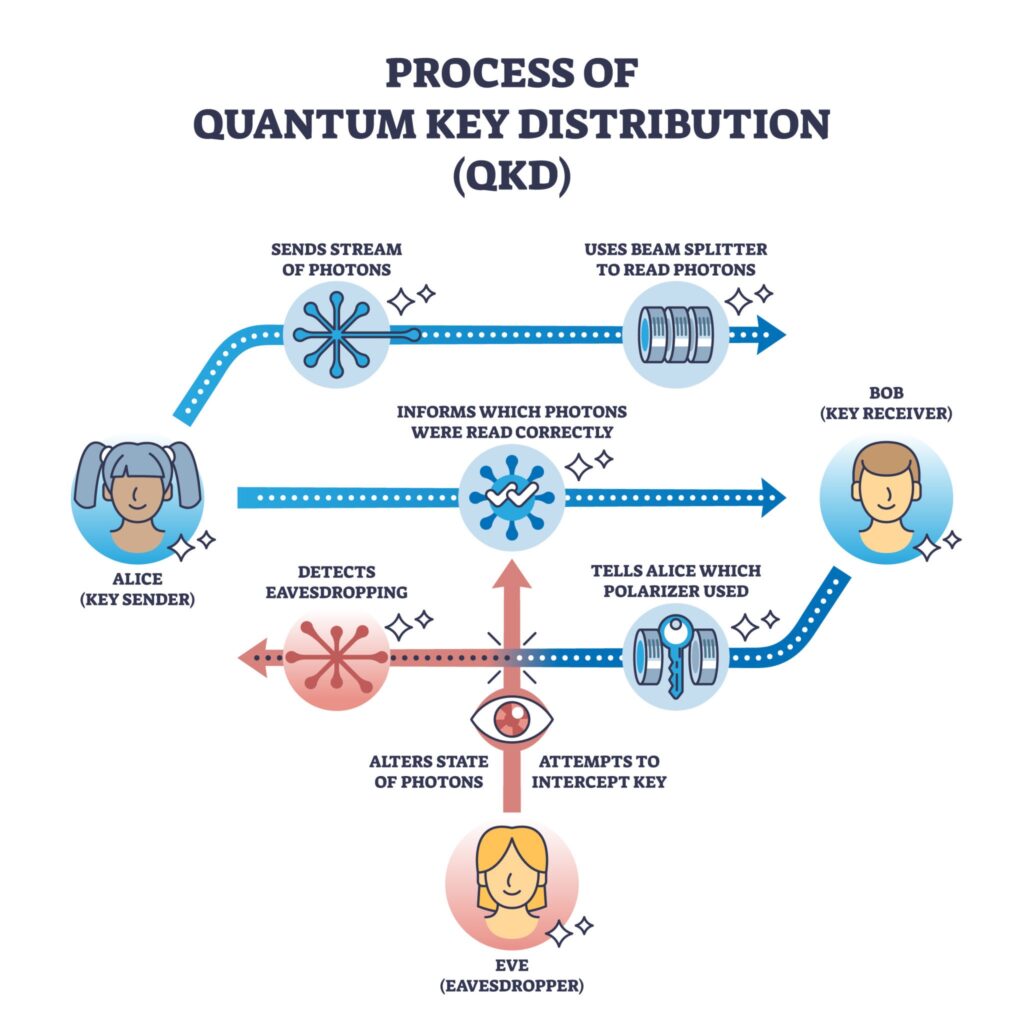
We are currently in a race to transition to Quantum-Resistant Cryptography. The goal is to build a “Quantum Internet” that uses the laws of physics (quantum key distribution) rather than just complex math to secure our data. If we fail, the digital world goes transparent. If we succeed, our privacy becomes unhackable.
The Brain Boost: When Quantum Meets AI
If you think current AI models like GPT-4 are impressive, imagine an AI that doesn’t just predict the next word, but understands the underlying fabric of reality.
The synergy between Quantum Computing and Artificial Intelligence (QAI) will make today’s LLMs look like pocket calculators. Quantum computers can process vast, multi-dimensional datasets simultaneously, allowing AI to achieve “General Intelligence” (AGI) by solving optimization problems that are currently mathematically impossible.
The Ethical Frontier: Ensuring Quantum Democracy
As we stand on this precipice, we must ask: Who holds the key?
The first nation or corporation to achieve “Quantum Supremacy” will possess an asymmetrical advantage unlike anything since the dawn of the nuclear age. To prevent a new “Quantum Divide,” we must advocate for open-access research and international guardrails. We cannot allow the fundamental building blocks of reality to be patented by the few.
A Timeline of Expectations
- Next 5 Years: “Noisy” Intermediate-Scale Quantum (NISQ) devices begin optimizing logistics and financial risk models.
- Next 10 Years: Quantum advantage is reached in chemistry; the first “Quantum-designed” battery materials hit the market.
- Next 20-25 Years: Fault-tolerant quantum computers become the gold standard, leading to the first real-time simulations of human cellular behavior.
By 2050, we won’t look at a computer as a tool on a desk, but as a window into the subatomic machinery of the universe. We are about to speak the language of the stars.
