
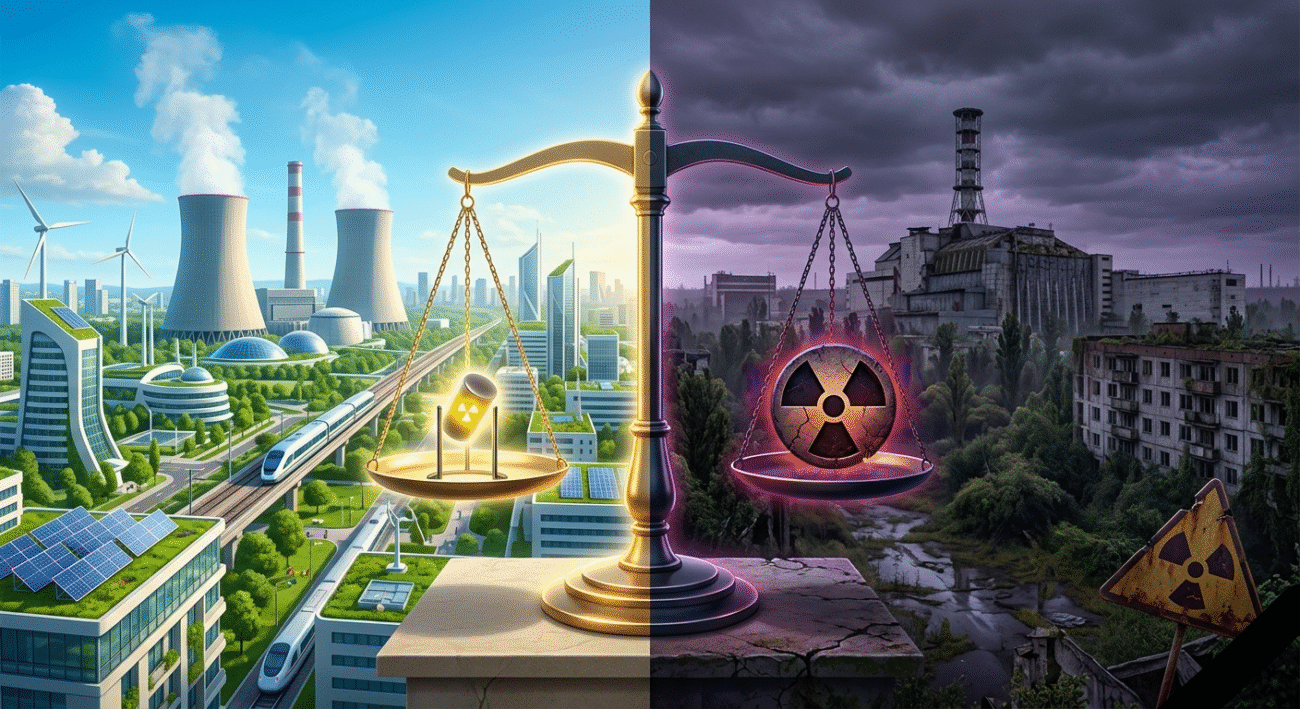
Split an atom, and you can light up an entire city. Split an atom, and you can also render that same city uninhabitable for generations. No energy source on Earth sparks as much intense debate, deep fear, and profound hope as nuclear energy. It is a technology born out of wartime destruction that now provides a massive chunk of the world’s clean electricity. But as climate change forces us to rethink how we power our planet, we have to look squarely at both sides of the coin. Here is the unfiltered truth about why nuclear power is good, and why it is bad.
The Good – Why Nuclear Power is Our Clean Energy Heavyweight
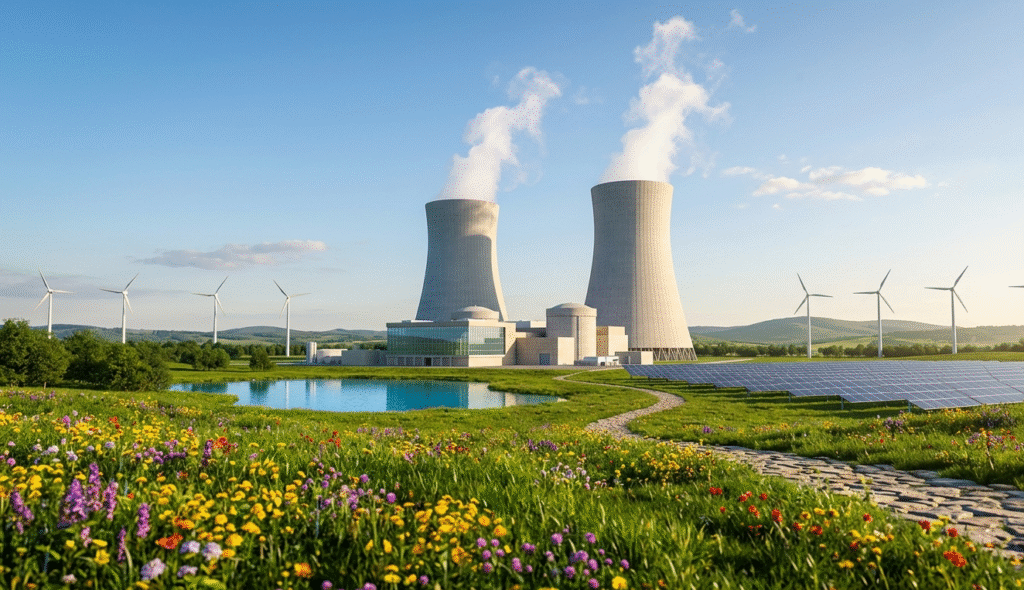
When evaluating why nuclear power is good, the conversation almost always begins and ends with the environment. As our planet warms, finding massive, reliable sources of energy that don’t spew greenhouse gases into the atmosphere is our top priority.
- An Incredibly Low Carbon Footprint: Unlike coal, oil, or natural gas plants, nuclear reactors do not burn fossil fuels. The entire process of generating electricity via nuclear fission produces zero carbon dioxide emissions. Over its entire lifecycle, including mining and construction, nuclear power releases roughly the same amount of greenhouse gases as wind energy and significantly less than solar.
- The Power of Density: Nuclear fuel is shockingly efficient. A single, one-inch Uranium pellet produces the same amount of energy as 120 gallons of oil, 17,000 cubic feet of natural gas, or nearly a ton of coal. This means nuclear power plants require a fraction of the land area needed by massive solar farms or wind fields to produce the same amount of electricity.
- Unmatched Reliability (Base Load Power): Solar panels need the sun to shine; wind turbines need the wind to blow. Nuclear power plants, however, operate at full capacity more than 92% of the time. They run 24/7, rain or shine, providing a steady, unshakable “base load” to the power grid that keeps the lights on when renewables falter.
Fast Facts (The Bright Side):
- Nuclear energy currently avoids over 470 million metric tons of carbon emissions globally every year, the equivalent of taking 100 million cars off the road.
- Nuclear power plants can operate continuously for 18 to 24 months before needing to pause for refueling.
The Bad – The Shadow of Waste and the Fear of Disaster
If the benefits of nuclear energy are so clear, why hasn’t the world completely abandoned fossil fuels for uranium? The answer lies in the formidable drawbacks. When looking at why nuclear power is bad, the risks are low in probability but catastrophic in consequence.
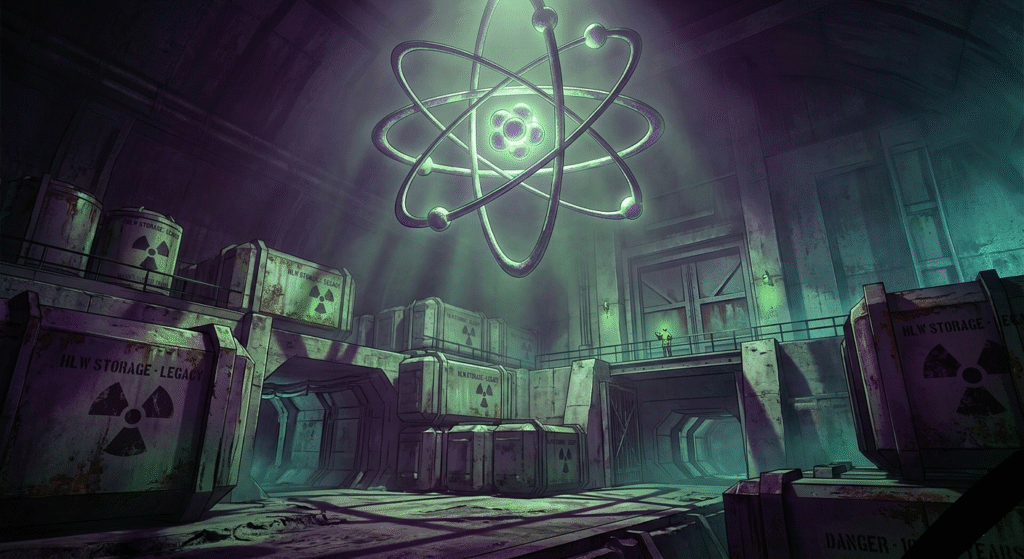
- The Million-Year Problem (Radioactive Waste): When uranium fuel rods finish their job inside a reactor, they remain intensely radioactive and highly dangerous. Currently, the world has no permanent, universally accepted solution for this high-level waste. It is temporarily stored in massive concrete and steel structures or underwater pools at reactor sites. This waste will remain hazardous to human health and the environment for tens of thousands of years, leaving a dangerous legacy for future generations to guard.
- The Threat of Meltdown: While modern nuclear plants are engineering marvels built with layers of redundant safety systems, history has shown us that perfection is impossible. Disasters like Chernobyl (1986) and Fukushima Daiichi (2011) proved that human error, mechanical failure, or natural disasters can lead to a core meltdown. When a meltdown occurs, it releases dangerous radiation into the environment, forcing mass evacuations, costing hundreds of billions of dollars, and contaminating ecosystems.
- Astronomical Costs and Slow Deployment: Building a nuclear power plant is a financial titan. They cost billions of dollars to construct and take anywhere from 8 to 15 years to go from blueprints to producing power. For developing nations or private investors looking to combat climate change right now, the massive upfront costs and long delays make nuclear energy a difficult pill to swallow.
Fast Facts (The Dark Side):
- All of the nuclear waste produced by the US nuclear industry over the last 60 years could fit on a single football field stacked about 50 feet high, yet finding a permanent home for it remains a political nightmare.
- Decommissioning (safely tearing down) a single old nuclear plant can take decades and cost upwards of $1 billion.
The Verdict – Is It a Risk Worth Taking?
Understanding why nuclear power is good and why it is bad requires us to balance two competing global crises: the immediate, existential threat of climate change versus the long-term management of radioactive risk.
Many scientists argue that we simply cannot meet our global climate goals and eliminate fossil fuels without nuclear energy acting as the reliable backbone of our grid. Conversely, critics argue that pouring billions into nuclear plants distracts from cheaper, safer, and faster-deploying renewable options like wind, solar, and advanced battery storage.
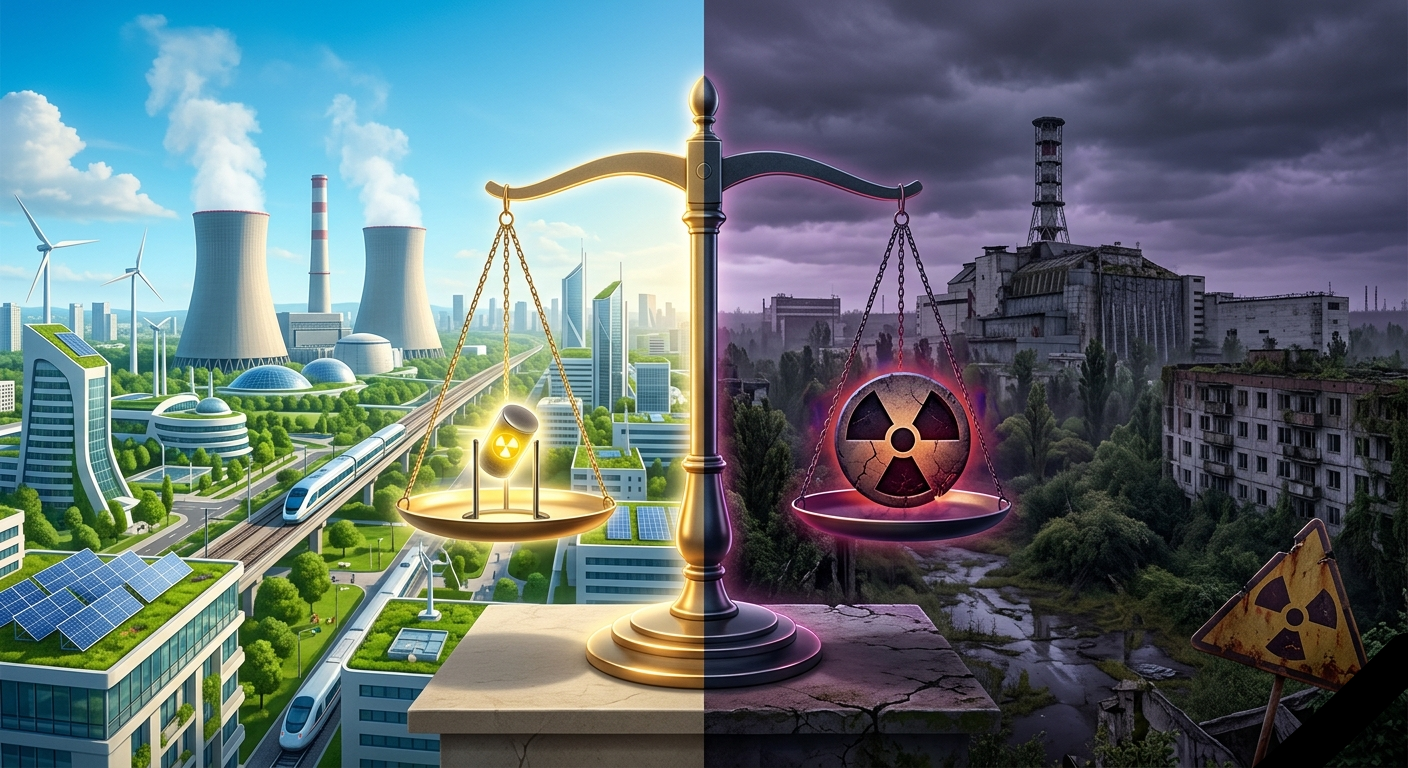
Conclusion: Weighing the Atomic Future
Nuclear power is neither a perfect miracle nor an unmitigated evil. It is a hyper-efficient, low-carbon tool wrapped in a blanket of high-stakes risk. As technology advances, newer “Generation IV” reactors and Small Modular Reactors (SMRs) are being designed to be completely meltdown-proof and even run on recycled nuclear waste, potentially blurring the lines of this great debate in the coming decades.
This deep dive is part of our ongoing exploration of how humanity powers its future. If you want to understand the raw physics of what happens inside these facilities, check out our comprehensive guide on [Inside the Reactor: How Nuclear Power Actually Works] to see how scientists safely control the split of the atom.
