
Have you ever stared at the steam rising from a power plant and wondered what’s really happening inside? It’s not just magic; it’s one of humanity’s most powerful scientific achievements, the mastery of the atom. We have figured out a way to “split” the very center of matter, releasing the energy that stars use, all to boil water and power your home. It’s an incredible story of control, heat, and precision, and today, we’re pulling back the containment dome.
The Atomic Split (The Core Concept)
At the heart of every nuclear reactor is a simple yet profound process called nuclear fission. This is the physics behind how nuclear reactors work. Fission happens when a heavy, unstable atom, usually Uranium-235, is struck by a tiny particle called a neutron.
Think of it like a cosmic billiard game. The neutron is the cue ball, and the Uranium nucleus is the highly organized rack of balls. When the neutron hits, the Uranium atom doesn’t just scatter; it splits violently into two smaller atoms.
This single split releases three critical things:
- A massive burst of kinetic energy.
- Radiation.
- Two or three new, fast-moving neutrons.
Fast Facts:
- A single Uranium pellet, the size of your fingertip, contains as much energy as a ton of coal.
- The temperature inside a reactor core can exceed 600°F (315°C), but advanced systems prevent melting.
The Chain Reaction and Its Master
The magic isn’t in one fission event; it’s in what happens next. Those new neutrons fly off and strike other Uranium atoms, causing them to split. This creates a self-sustaining cycle called a chain reaction.
If this reaction is left unchecked, it can exponentially increase, releasing all its energy in microseconds, this is how an atomic bomb works. But in a power reactor, this reaction is carefully controlled. This is the entire purpose of the reactor core.
The core contains:
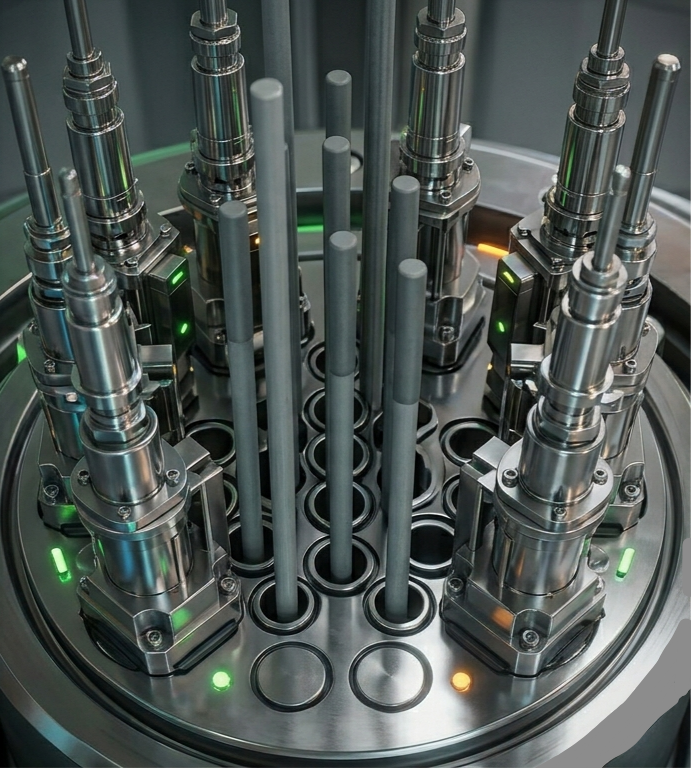
- Fuel Rods: Long metal tubes packed with thousands of Uranium pellets.
- Control Rods: The “brakes” of the reactor. Made of neutron-absorbing materials like cadmium or boron, these rods can be lowered into or lifted out of the core.
- If scientists want less power, they lower the rods to absorb neutrons and slow the reaction. If they want more power, they lift the rods. This allows us to keep the reaction at a “critical” state, meaning it sustains itself perfectly without growing dangerously.
A Visual Metaphor: Imagine noise-canceling headphones. The control rods are like the active canceling technology; they perfectly neutralize the excess noise (neutrons) to keep the signal (the chain reaction) at a constant, usable volume.
Turning Heat Into Power (The Modern Industrial Part)
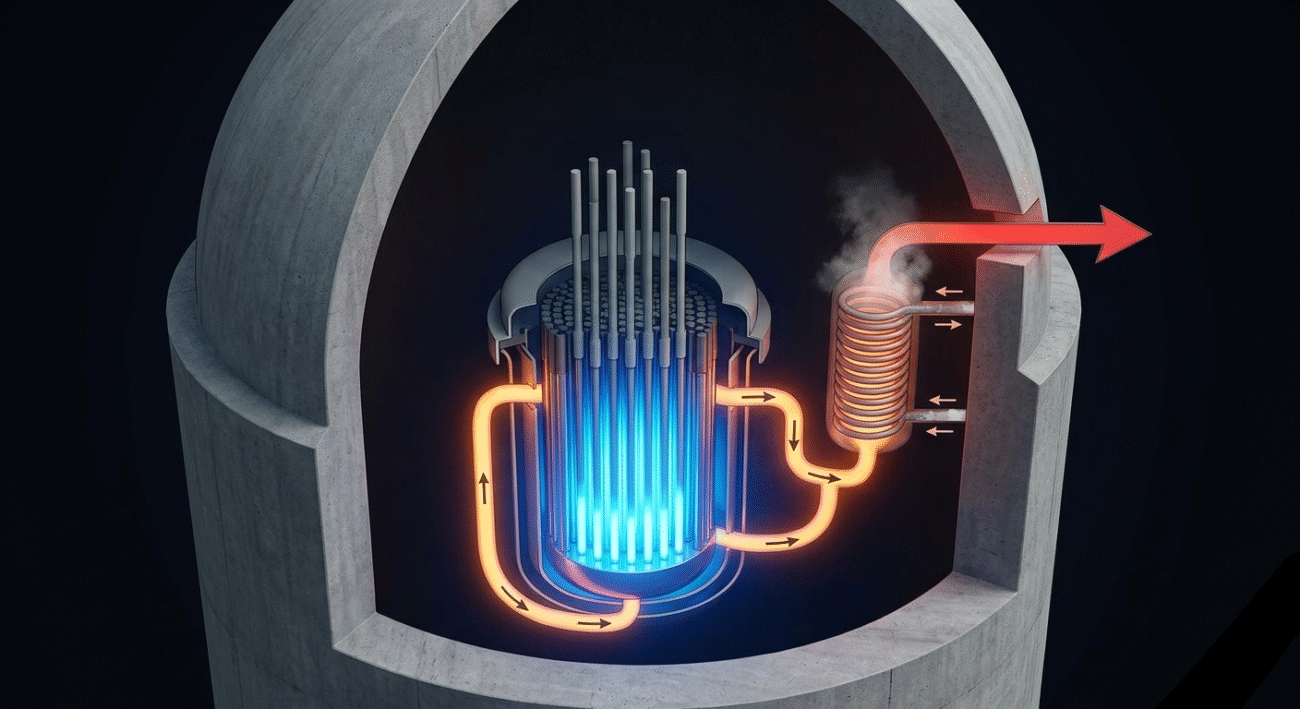
A nuclear reactor is essentially a sophisticated machine for boiling water. That tremendous heat from the chain reaction needs a job. A substance, usually highly pressurized water (a “coolant”), is pumped through the core, absorbing all that heat.
In the most common type of reactor, this superheated water then travels to a steam generator. Here, it transfers its heat to a separate loop of water, turning that water into high-pressure steam.
This steam is then channeled to spin a massive turbine, which is connected to a generator. The spinning generator is what finally creates the electricity that flows into the power grid. After the steam does its job, it travels to a cooling tower (the big iconic structure) or a cooling pond, where it releases its leftover heat into the atmosphere as water vapor (that steam you see), condenses back into liquid water, and is recycled back to begin the process again.
The Ultimate Defense (The Containment Building)
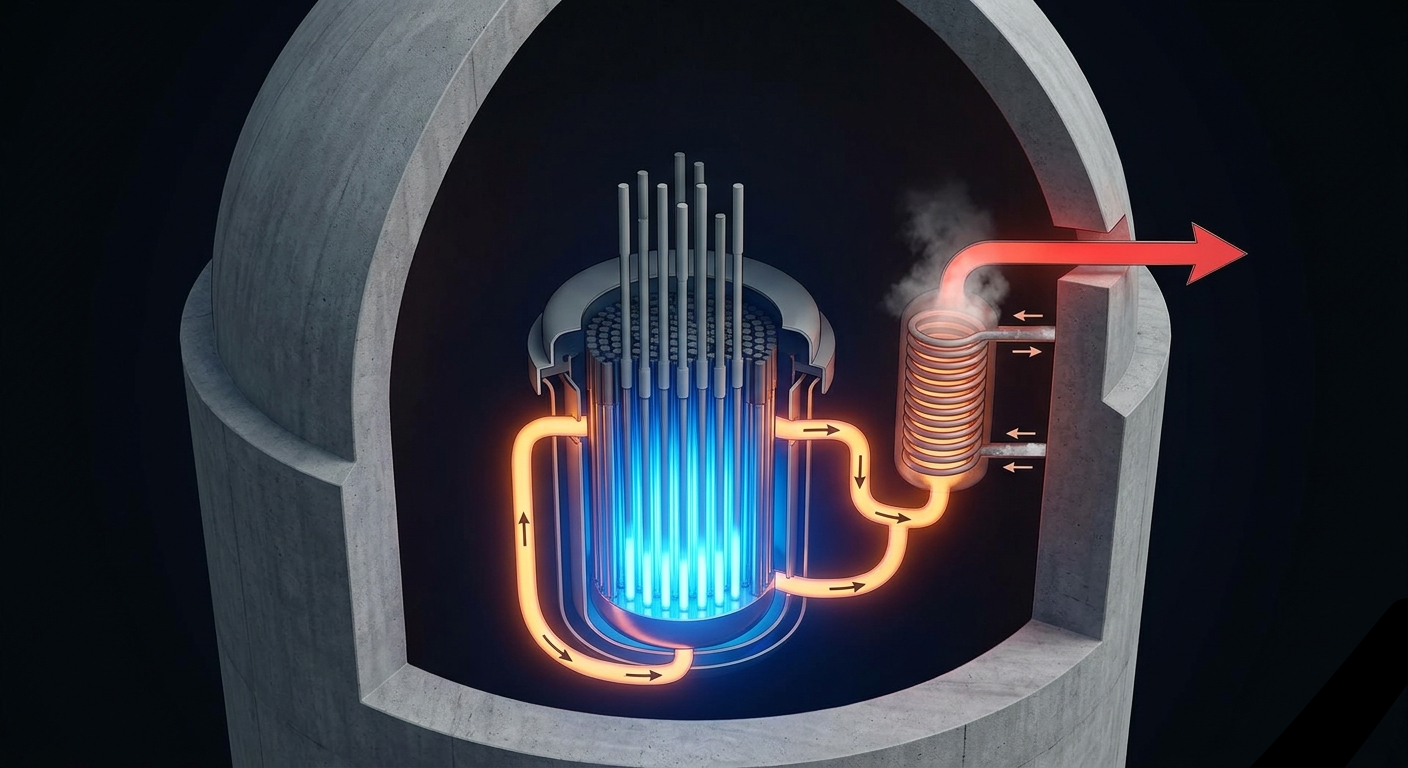
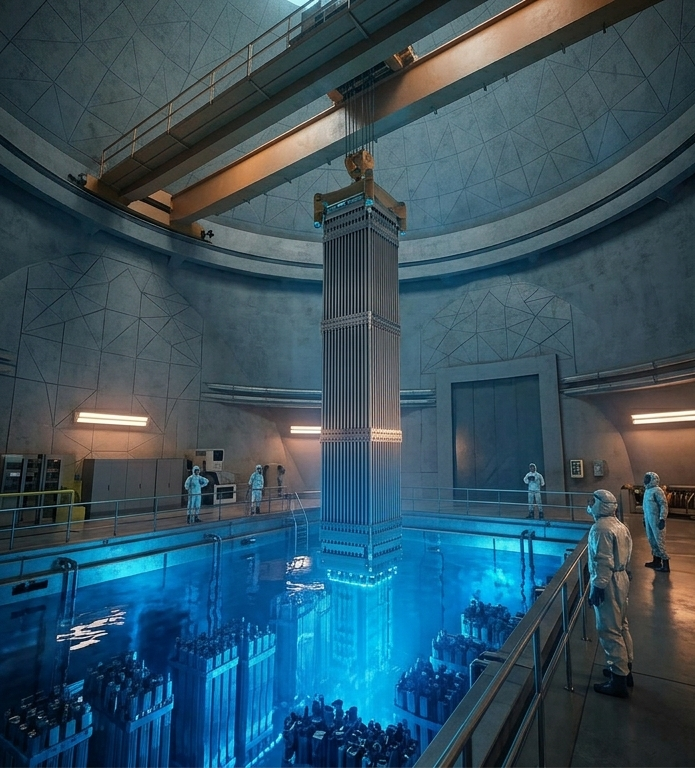
The final key aspect of how nuclear reactors work is safety. The entire primary system, the reactor core, control rods, and steam generators, is sealed inside a massive containment building. This building is a multi-layered structure with walls that are several feet thick, made of steel-reinforced concrete.
Its purpose is simple but critical: to prevent any radioactive materials from escaping into the environment, even in the worst-case scenario. This structure is engineered to withstand extreme events, from earthquakes to airplane impacts, serving as the ultimate final shield.
Conclusion: The Future of Energy
We hope this guide has demystified how nuclear reactors work. It is a powerful technology that balances cosmic physics with extreme engineering to provide carbon-free energy. As we look toward the future, the lessons learned from advanced fission and the ongoing quest for nuclear fusion (the opposite process) will likely define the energy landscape of the 21st century.

One thought on “Inside the Reactor: How Nuclear Power Actually Works”