
Explore the profound question of whether the laws of physics are the same in distant galaxies as they are on Earth. From the light of ancient stars to the depths of black holes, we look at the evidence for a unified universe.
The Great Cosmic Sameness: Are the Rules of Reality Constant?
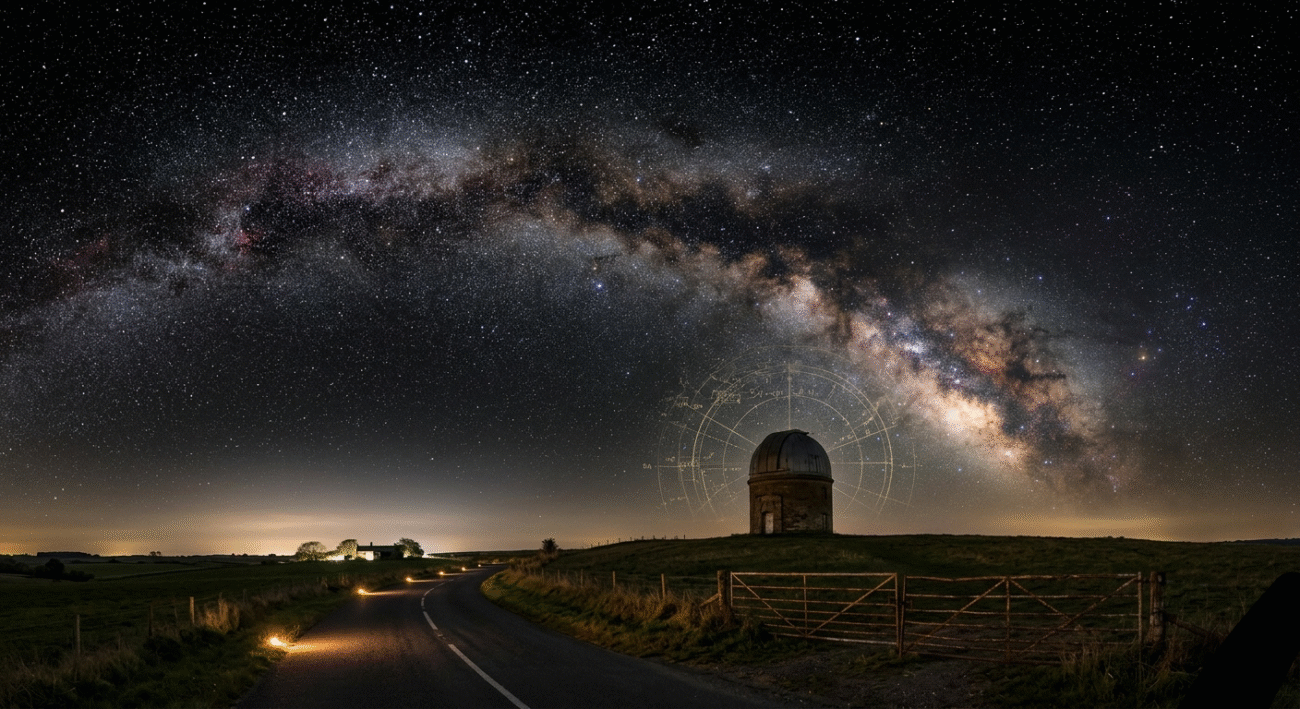
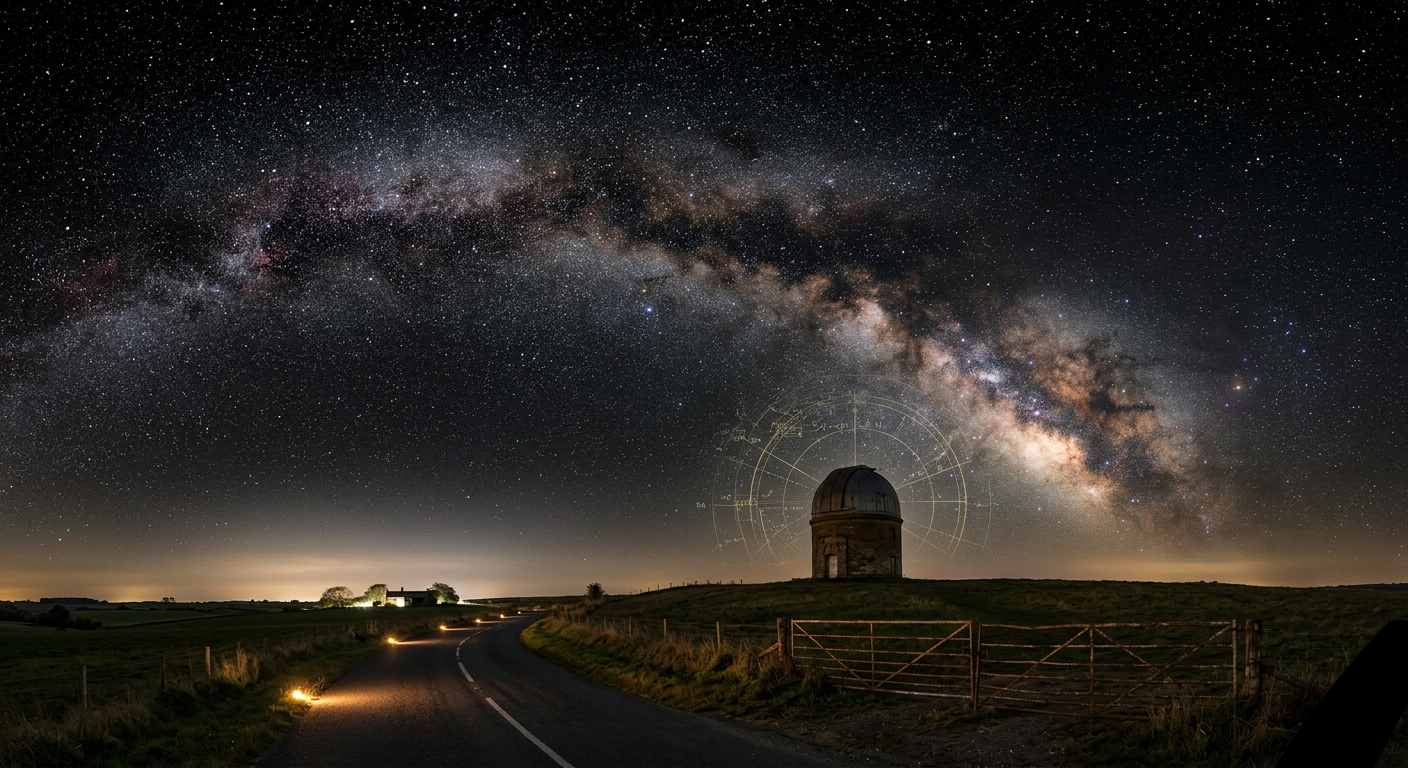
I remember sitting on a porch in rural Vermont a few years ago, looking up at a sky so dark the Milky Way looked like a spilled bucket of silver paint. It’s a humbling sight, but it also triggers a weirdly specific question: Are the rules over there the same as the rules over here?
When we drop a coffee mug in our kitchen, it falls at a very predictable rate. We’ve got gravity figured out (mostly). But what’s to say that in a galaxy three billion light-years away, gravity doesn’t take a nap on Tuesdays, or that light doesn’t crawl along at the speed of a suburban commute?
If the laws of physics shifted depending on your zip code in the universe, science as we know it would crumble. We’d be living in a fractured reality where every corner of space played by its own local house rules.
The Assumption of Uniformity
In physics, we have this foundational idea called the Cosmological Principle. It’s essentially a fancy way of saying that, on a large enough scale, the universe is both homogeneous (it looks the same everywhere) and isotropic (it looks the same in every direction).
Now, this isn’t just scientists being lazy and wanting one set of equations to grade. It’s a necessity. If the “Fine-Structure Constant“, which governs how light and matter interact, was even a tiny bit different in the Andromeda galaxy, the stars there might not fuse hydrogen the way ours do. They might not even shine.
The fact that we can look through a telescope and see stars in the far reaches of space behaving remarkably like our Sun suggests that nature is a fan of consistency.
Checking the Cosmic “Fingerprints”
How do we actually prove this, though?
We can’t exactly send a lab technician to the Boötes Void with a ruler and a stopwatch. Instead, we use light as our messenger.
Every element, hydrogen, helium, carbon, leaves a specific “fingerprint” on the light it emits or absorbs. These are called spectral lines. If you look at the light from a distant quasar (a massive, glowing galactic core), you can see those same fingerprints.
- The Experiment: Back in the early 2000s, a team of researchers led by John Webb analyzed light that had traveled for 12 billion years to reach us. They were looking specifically at the fine-structure constant (\alpha).
- The Result: For a moment, they thought they saw a tiny, tiny variation, a hint that physics might have “evolved” over time.
It caused a massive stir. But as follow-up studies and better technology (like the Very Large Telescope in Chile) came online, the “variation” seemed to disappear into the margins of error. For now, the evidence suggests that the laws of physics have remained remarkably steady for at least 90% of the universe’s history.
The Consistency of Gravity
Then there’s gravity. Einstein’s General Relativity tells us how space-time curves around mass. If gravity were “leakier” or stronger in other neighborhoods, the orbits of distant binary stars would look wonky to us.
We’ve observed pulsar pairs, incredibly dense, spinning stars, thousands of light-years away. By timing their pulses, we can test gravity with extreme precision. So far, Einstein’s math holds up just as well out there as it does in a lab in Zurich. It’s as if the universe is running on a single, universal operating system that never needs a regional patch.
Why Does It Matter?
You might wonder why we spend millions of dollars on satellites just to confirm that a proton is still a proton.
The answer is that if we find even a single place where the laws of physics break, it would be the greatest discovery in human history. It would mean our “laws” aren’t actually laws, they’re just local customs.
But there’s something more profound at play here. The uniformity of the universe suggests a deep, underlying unity. It implies that the cosmos isn’t a chaotic collection of random events, but a coherent, structured whole. Whether you view that through a scientific lens or a more philosophical one, it’s a staggering thought. The same “logic” that allows a child to blow bubbles in a park also allows galaxies to spiral and nebulae to give birth to stars.
The Outliers: Black Holes and the Big Bang
Of course, we have to talk about the “glitches” in the system. While the laws of physics seem the same across space, they do seem to get a bit stressed at the extremes.
Inside a black hole, or at the very trillionth of a second of the Big Bang, our current equations start spitting out “infinity” as an answer. This doesn’t necessarily mean the laws changed; it means our understanding of them is incomplete. We’re like people trying to describe the ocean while only ever seeing the surface. When things get deep and heavy, we realize we’re missing a few pages of the manual.
A Reflection on Our Place
There is a certain comfort in the idea that we live in a “lawful” universe. It means that the human mind, despite being tucked away on a small blue planet, is capable of deciphering the inner workings of objects billions of trillions of miles away.
When we calculate the trajectory of a moon orbiting Saturn, or the heat of a star in the Orion Nebula, we are participating in a conversation that spans the entire cosmos. We aren’t outsiders looking in; we are part of a system that is consistent, reliable, and, perhaps most importantly, knowable.
The next time you’re out under a clear night sky, take a second to look at a random star. It’s easy to feel small. But remember: the very same atoms and forces that make up your own body are currently choreographing the dance of that star. The universe, in all its vastness, speaks only one language.
