

Explore the breathtaking beauty and scientific wonder of nebulae. Discover how these cosmic clouds of gas and dust act as the nurseries for new stars and the building blocks of the universe.
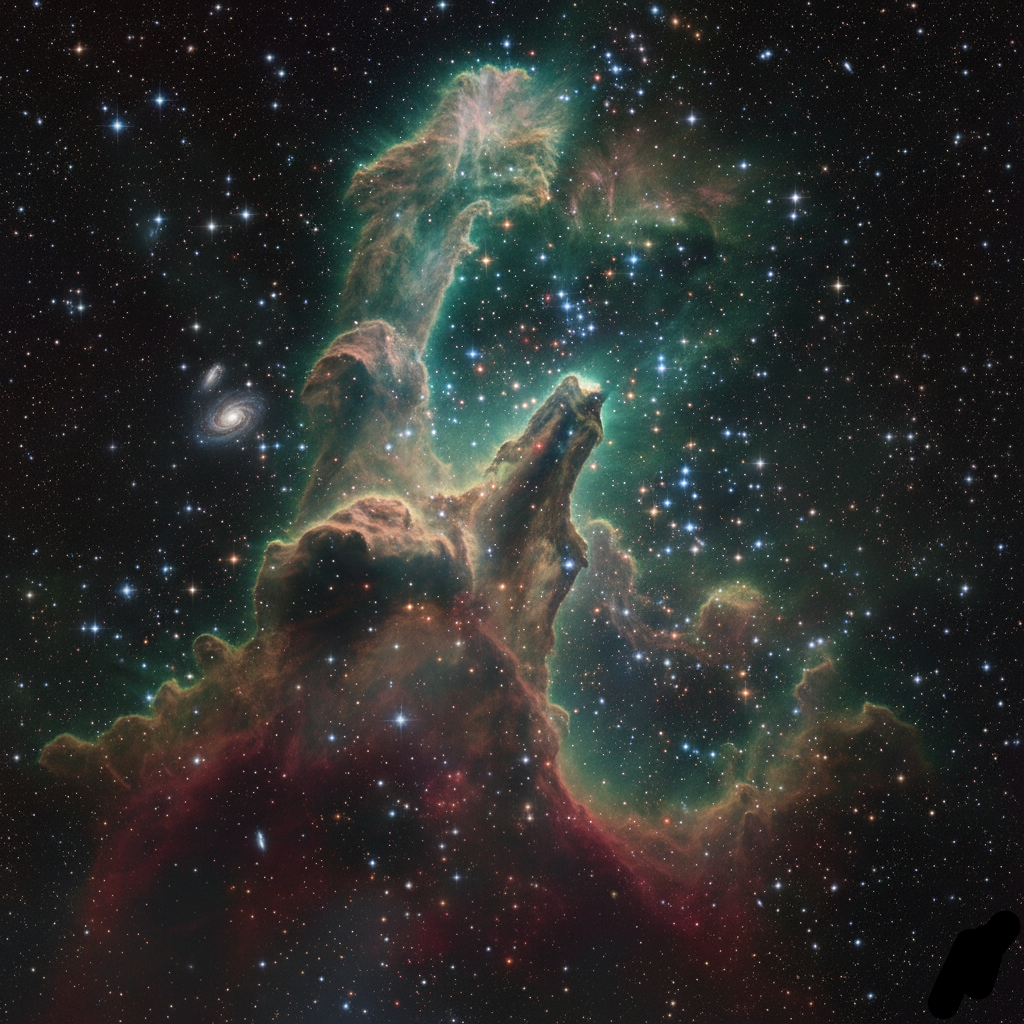
If you’ve ever looked at the famous “Pillars of Creation” photo taken by the Hubble or James Webb telescopes, you’ve felt that immediate sense of awe. It looks like a painting, towering, translucent spires of emerald and gold reaching out into the dark. But those aren’t just pretty shapes. You’re looking at a nebula, one of the most vital “organs” in the body of our universe.
For a long time, astronomers used the word “nebula” (Latin for “cloud” or “fog”) as a catch-all term for anything that looked fuzzy through a telescope. Today, we know these clouds are the staging grounds for the greatest drama in the cosmos: the birth and death of stars.
The Celestial Nursery: Where Stars are Born
Imagine a cloud so vast that it takes light years to cross it. Now, imagine that cloud is made of the simplest ingredients imaginable, mostly hydrogen gas with a sprinkling of cosmic dust.
In the quiet stretches of space, these clouds sit in a delicate balance. But eventually, something nudges them. Maybe it’s the shockwave from a distant explosion or just the slow, relentless pull of gravity. When that happens, the gas begins to clump together.
As these clumps grow, they get heavier and hotter. Think of it like a cosmic snowball effect. Eventually, the center becomes so dense and so incredibly hot that a miracle of physics occurs: nuclear fusion. At that moment, the “clump” clears away its surrounding dust and begins to shine. A star is born.
When you look at a nebula like the Orion Nebula, you aren’t just looking at gas; you’re looking at a maternity ward. Hidden inside those colorful folds are hundreds of “protostars” waiting for their moment to light up the dark.
A Palette of Light and Chemistry
One of the most common questions people ask is: Are the colors real? If you were standing right next to a nebula, you might be disappointed. They are incredibly thin, often less dense than a vacuum we can create in a lab on Earth. But from our perspective, these clouds glow with a brilliance that tells a story of chemistry.
- The Red Glow: This is usually hydrogen, the primary building block of the universe. When nearby stars blast the gas with radiation, the hydrogen atoms get excited and glow a deep, soulful crimson.
- The Blue Hues: This is often “reflection.” The dust in the nebula isn’t glowing on its own; it’s scattering the blue light from nearby stars, much like why our sky looks blue during the day.
- The Green and Gold: These often signal the presence of oxygen or sulfur.
It’s a magnificent design. These colors allow us to “read” the nebula, telling us exactly what it’s made of and how hot the local stars are without us ever having to leave our solar system.
The Grand Recycling Project
Not all nebulae are about beginnings; some are about endings.
When a star roughly the size of our Sun reaches the end of its life, it doesn’t go out with a bang. Instead, it gently exhales its outer layers into space, creating what we call a Planetary Nebula (a confusing name, I know, early astronomers thought they looked like planets). These look like glowing rings or delicate bubbles, like the famous Ring Nebula.
However, when a massive star dies, it goes out in a Supernova. The leftover guts of that star sprayed across the void create a “Supernova Remnant.” These are jagged, chaotic, and rich with heavy elements like gold, silver, and iron.
Also read: The Cosmic Goldilocks: Is the Universe Actually Built for Us?
A Reflection on the Creator’s Canvas
When we study these structures, it’s hard not to feel that we are looking at a masterpiece. To some, the universe is a series of random accidents. But when you see the precision required for a star to form, the perfect balance of gravity, pressure, and heat, it feels much more like an intentional act of creation.
The nebula isn’t just a cloud of gas; it’s a testament to a grander architecture. It shows us that the universe isn’t a cold, dead place. It is a living system that builds, recycles, and creates beauty on a scale that humbles the human imagination.
Whether you are looking through a high-powered telescope or just scrolling through NASA’s latest releases, remember that you’re looking at the “soil” of the galaxy. From these clouds, planets are formed. From these clouds, life eventually finds a home.

One thought on “Why Nebulae are the Universe’s Most Beautiful Factories”