
Ever wondered how astronomers find planets trillions of miles away? Explore the ingenious methods, from “wobbling” stars to cosmic shadows, used to discover exoplanets.
For most of human history, if you looked up at the night sky and asked, “Are there other worlds out there?” the only honest answer was a shrug. We knew about our neighbors, Mars, Venus, the gas giants, but beyond our solar system, the universe was a silent void. We assumed there were other planets, but for all we knew, the Earth was a cosmic fluke.
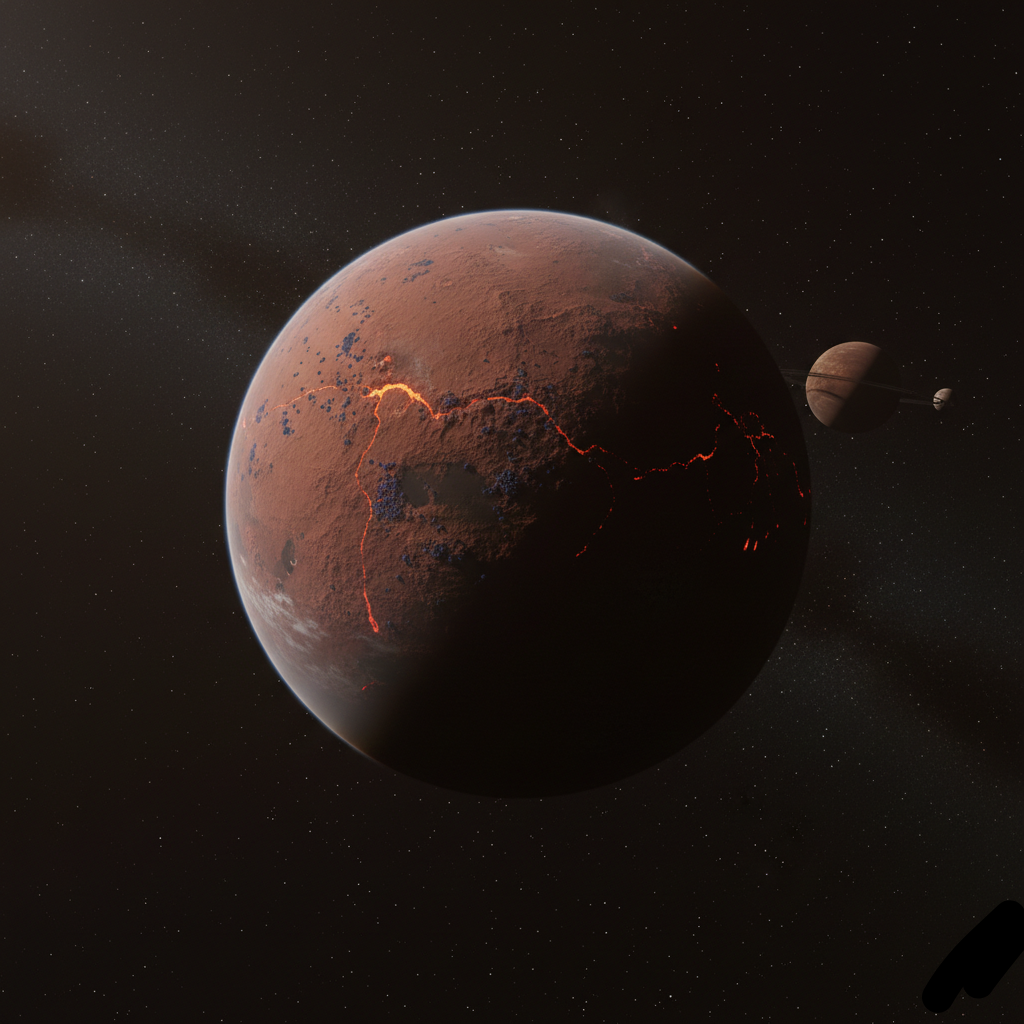
That changed in the 1990s. Since then, the floodgates have opened. As of today, we’ve confirmed thousands of planets orbiting distant stars, ranging from hellish lava worlds to “super-Earths” that might just be habitable.
But here’s the kicker: we’ve almost never actually seen them.
Imagine trying to spot a firefly crawling across a massive searchlight located in Los Angeles while you’re standing in New York. That’s the challenge astronomers face. The stars are so bright and the planets so small and dim that they are lost in the glare. So, how do we find them? We have to get creative. We don’t look for the planet; we look for the effect the planet has on its star.
1. The Transit Method: Looking for Cosmic Shadows
The most successful planet-hunting technique is surprisingly simple. It’s called the Transit Method.
Think about a lightbulb hanging in a room. If a moth flies across the bulb, the light in the room dips just a tiny bit. You might not see the moth itself, but if you have a sensitive light meter, you’ll notice the flicker.
Astronomers do this on a galactic scale. Telescopes like Kepler and TESS stare at thousands of stars at once, waiting for a “moth” to cross. When a planet’s orbit aligns perfectly so that it passes between its star and Earth, it blocks a minuscule fraction of the starlight, often less than 1%.
By measuring how much the light drops and how long it stays dim, we can calculate the planet’s size and how fast it’s moving. It’s a game of patience and precision, but it has revealed the vast majority of the worlds we know today.
2. The Radial Velocity Method: The Stellar Wobble
If the Transit Method is about sight, the Radial Velocity Method is about “feeling” the gravity.
We’re taught in school that planets orbit stars, but that’s not 100% accurate. Gravity is a two-way street. While the star’s massive gravity pulls on the planet, the planet’s gravity also gives the star a tiny, rhythmic tug. This causes the star to “wobble” in a small circle.
To detect this, we use something called the Doppler Effect. You’ve heard this in real life: when an ambulance speeds toward you, the siren sounds high-pitched; as it moves away, the pitch drops. Light does the same thing.
- When a star wobbles toward us, its light shifts slightly blue.
- When it wobbles away, it shifts slightly red.
By analyzing these subtle color shifts, astronomers can “weigh” the invisible planet. The bigger the wobble, the more massive the planet. This was actually the method used to find the very first planet orbiting a sun-like star, 51 Pegasi b, back in 1995.
3. Gravitational Microlensing: Using Gravity as a Magnifying Glass
This one feels like it was ripped straight out of a sci-fi novel. According to Einstein’s theories, gravity can actually bend light. Massive objects like stars act like natural magnifying glasses in space.
Imagine two stars perfectly lining up from our perspective on Earth. The gravity of the closer star focuses the light of the distant star, making it appear much brighter for a short time.
Now, if that closer star has a planet orbiting it, the planet’s own gravity adds an extra little “blip” to that magnification. It’s a rare, one-time event, we can’t go back and check it again because the stars are constantly moving, but it’s one of the few ways we can find planets that are incredibly far away, even near the center of our galaxy.
4. Direct Imaging: The “Holy Grail”
Finally, we have the most straightforward (and most difficult) method: Direct Imaging. This is exactly what it sounds like, taking an actual picture of the planet.
As mentioned earlier, the star’s light usually drowns out the planet. To solve this, astronomers use a device called a coronagraph. It’s essentially a high-tech “mask” inside the telescope that blocks out the star’s disk, much like you might use your hand to block the sun so you can see a bird flying nearby.
This method is incredibly tough and usually only works for very large planets that are far away from their stars. However, when it works, the results are breathtaking. We can actually see little dots of light moving in orbits over several years. It turns a mathematical probability into a physical reality.
Also read : The Cosmic Nomads: Are Rogue Planets Wandering the Dark Between Stars?
Why Does It Matter?
You might wonder why we spend billions of dollars and decades of research hunting for rocks and gas balls so far away we can never visit them.
The answer isn’t just about physics; it’s about context. For centuries, we were the only example of a “solar system” we had. We assumed every system would look like ours: small rocky planets near the sun, big gas giants far away.
The more we look, the more we realize how delightfully weird the universe is. We’ve found “Hot Jupiters” that orbit their stars in just a few days, and “Rogue Planets” that drift through the dark of space without any star at all.
Every new discovery is a piece of a larger puzzle. We are trying to understand our own origin story. By looking at these distant worlds, we are essentially looking into a mirror, asking if the conditions that allowed us to exist are a common miracle or a rare exception.
The universe is a vast, silent ocean, and for the first time, we’re realizing that it is teeming with islands. We may not be able to sail to them yet, but just knowing they are there changes everything. It reminds us that we are part of something much larger, a grand architecture that we are only just beginning to map.
