

Journey beyond the event horizon. Explore the mind-bending physics of black holes, from spaghettification to the mystery of the singularity.
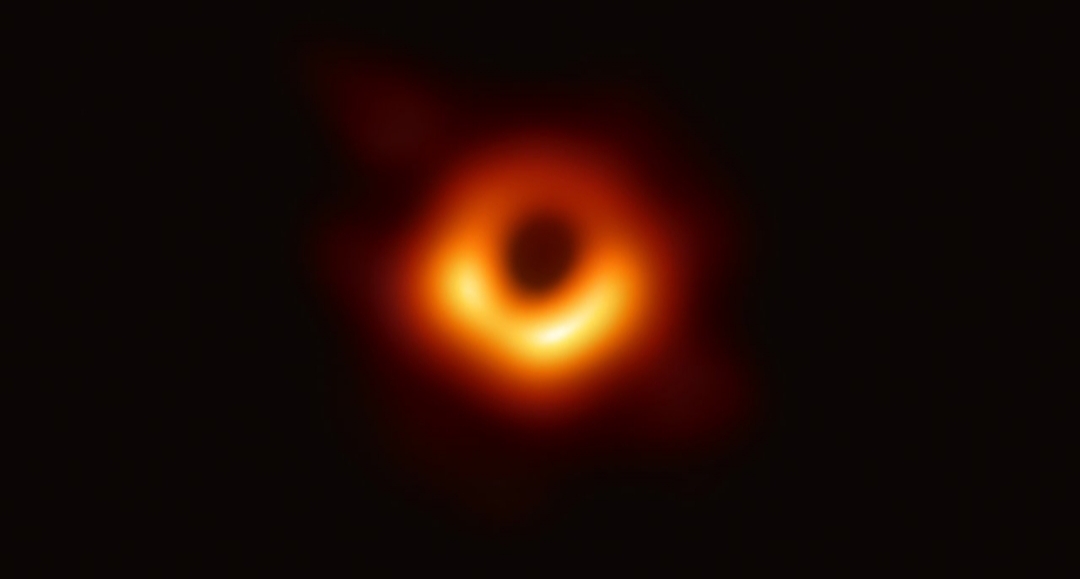
Image Credit: Event Horizon Telescope.
If you’ve ever stood on the edge of a high cliff or looked out over a dark, vast ocean at night, you’ve felt that specific prickle of “the unknown.” It’s a mix of awe and a very healthy dose of “I should probably stay back.”
In the cosmic sense, black holes are the ultimate version of that cliff. They are the universe’s “No Entry” signs. For decades, we’ve treated them as the ultimate monsters of the deep space, invisible, hungry, and fundamentally mysterious. But thanks to recent breakthroughs in imaging and gravitational wave detection, we’re finally starting to peek behind the curtain.
So, let’s take a hypothetical (and very dangerous) trip. If you were to fall into a black hole, what would you actually see? And more importantly, what happens when you cross the point of no return?
The Invisible Border: The Event Horizon
First, we have to talk about the “surface.” Except, a black hole doesn’t have a surface in the way a planet does. There’s no rocky ground to land on. Instead, there is the event horizon.
Think of the event horizon as the “exit” sign of the universe. Once you pass it, the speed required to get back out is greater than the speed of light (about 300,000 km/s). Since nothing in our universe can travel faster than light, anything, light, dust, or an unlucky astronaut, that crosses that line is gone for good.
From the outside, if I were watching you fall in, things would look very strange. Because of how gravity warps time, I would see you slow down as you approached the edge. You would turn a deep, ghostly red (a phenomenon called gravitational redshift) and eventually seem to just… freeze. To me, you’d never actually “fall in.” You’d just fade away like a developing photograph left in the sun too long.
But for you? You wouldn’t feel a “thump” when you hit the horizon. You’d just keep falling.
Also read: Is Time An Illusion?
Spaghettification: A Very Literal Name
The closer you get to the center, the weirder the physics gets. If you’re falling feet-first, the gravity pulling on your toes is significantly stronger than the gravity pulling on your head.
In your daily life on Earth, you don’t notice this because the Earth is huge and you are small. But near a stellar-mass black hole, that difference becomes violent. It would stretch you out into a long, thin strand of atoms. Physicists, who apparently have a dark sense of humor, actually call this spaghettification.
Pro Tip: If you’re planning a vacation to a black hole, aim for a “Supermassive” one, like the one at the center of our galaxy. Because they are so much larger, the “stretch” at the event horizon is much gentler. You could actually survive the trip across the border, at least for a little while.
Where Space and Time Swap Roles
Once you are inside the event horizon, the universe as you know it breaks. In our normal lives, we have three dimensions of space (left/right, up/down, forward/backward) and one dimension of time. We can choose to walk left or right, but we must move forward in time.
Inside a black hole, these roles essentially flip. The gravitational pull toward the center becomes so overwhelming that “downward” (toward the center) is no longer a direction in space, it becomes your future.
Just as you cannot stop tomorrow from coming, you cannot stop yourself from moving toward the center. Trying to fly away from the center of a black hole would be like trying to fly away from Tuesday. It’s not a destination; it’s an inevitability.
The Singularity: The End of the Road
Eventually, everything leads to the singularity. This is the heart of the black hole, where all that mass has been crushed down into a point of infinite density.
This is where our math stops working. Einstein’s General Relativity says the density becomes infinite, but “infinite” is usually a physicist’s way of saying, “We have no idea what’s going on here.” It’s the point where gravity (the physics of the very large) and quantum mechanics (the physics of the very small) have a massive argument that nobody has won yet.
Is it a hole to another universe? Is it a “White Hole” spitting out matter somewhere else in time? Or is it just the end of the line, the place where the information that makes up “you” is shredded and stored on the horizon like data on a hard drive?
Why Does It Matter?
It’s easy to look at black holes as terrifying cosmic vacuum cleaners, but they are actually vital to the story of “us.” They help regulate the growth of galaxies. They stir up the gas that creates new stars. Without the supermassive black hole at the center of the Milky Way, our cosmic neighborhood might look very different.
Beyond the science, black holes represent the ultimate frontier of human curiosity. They are the places where the laws of nature are pushed to their breaking point. Every time we photograph one or listen to the “chirp” of two black holes colliding, we are essentially eavesdropping on the secrets of creation.
We may never be able to look inside a black hole and report back. But in trying to understand them, we are forced to ask better questions about what space, time, and reality actually are.
Perhaps the most comforting thought is that even in these dark, bottomless pits, there is a kind of order. The universe doesn’t break; it just changes the rules. Our job is simply to learn how to read the new rulebook.

One thought on “The Edge of Everything: What Actually Happens Inside a Black Hole?”